Showing posts with label dangersecond. Show all posts

Thursday, January 7, 2010

Winter Stew


While I was on holiday in the Northeast, I had my two and a half weeks of winter. Then I returned to Southern California where I walked around in my shirt sleeves after dark and thought about how happy I was to be back. But while I was East, I made a very wintery meal, which I will now share with you, to help you get through all those long, dark, cold days that you may or may not have ahead.

YOU WILL NEED:
4 white or yellow onions
6 or so fair sized red-skin potatoes
2 cloves of garlic
1 parsnip
1 turnip
1 yam
1 pound of carrots
1 large steak
Oregano, thyme, black pepper, tarragon and bay leaf to season.
Olive oil, to cook in.

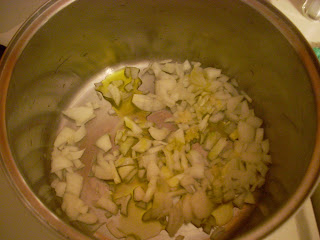
Begin by chopping your onions and pressing your garlic. In this case, I chose to use a garlic
press instead of just chopping it, because I wanted it to infuse into the broth that I was making.
Chop two of your onions into into small pieces. Set the other two aside. Press both cloves of
garlic. Fry these two things in olive oil in the bottom of a large soup pot.

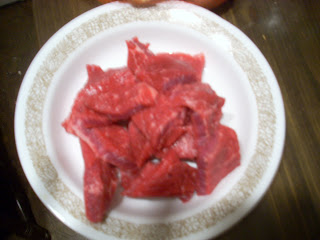
Next, you will need to cut up your meat.
Once you have done this, add it, and more oil, to your pot.

Fry it until all the meat appears cooked.

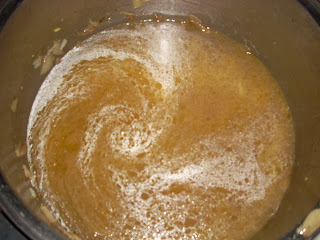
Then add six to eight cups of water and a teaspoon of salt. You have magically created beef broth, free of all the extra crap and packaging usually associated with beef broth!

Let it come to a boil as you chop your vegetables.

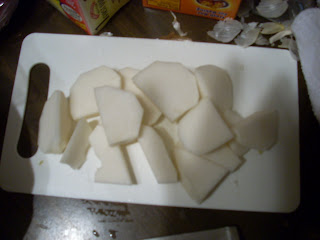
You will need to peel and cut the turnip, parsnip and yam. All vegetables should be cut to about the size of a quartered, small potato. You should leave the skins on the potatoes and carrots.
The skins add flavor and nutrients to your food. You might want to cut up your carrots into smaller, coin sized rings. That's what I do.

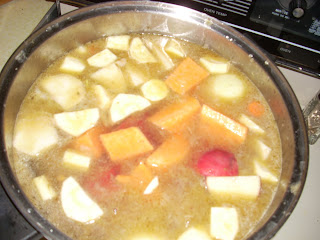
Add the veggies to the pot, and then season it well with Oregano, black pepper, two bay leaves, thyme and tarragon. Don't over do it, but don't under do it.
Then get it simmering and leave it there for a while, uncovered. With soups and stews, I have the following rule of thumb: if you want it to thicken, uncover it. If you want it to keep its moisture, cover it. Stews should thicken out.
Then go do something else for about an hour. I recommend Mario Kart Double Dash.
Once you've totally won against your siblings and become the queen of your household once again, or if you did something else, about an hour later, the soup will be ready. You should check it in between every couple of races... I mean, every fifteen minutes or so, to make sure
nothing is sticking or burning. If it is, reduce the heat.

When the soup is finished, the yam will have cooked into the broth and all the rest of the vegetables will be mushy and tender. The meat, in my case, was tender enough to cut with a
spoon.

Now, I like to eat garlic bread with stew, personally. Garlic bread is easy to make. Its very similar to the recipe for garlic bread stuffing, but here it is again, just in case:

You will need:
About a half a stick of butter
4 cloves of garlic
Oregano and basil, to season
Thick bread, sliced.

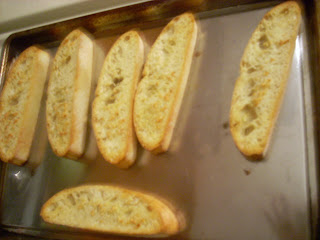
Arrange the bread slices on a cookie sheet. Preheat the oven to about 375. Then melt the butter in the microwave so it is a liquid. Use a garlic press, or cut the garlic by hand into small pieces, and add all of it to the liquified butter. Season it. Stir it up.
If you have a little brush, you can brush it on the bread. If not, you can sort of pour it on with a spoon.
Bake for about five to ten minutes, keeping a weather eye, to make sure the bread gets to be your desired amount of crunchy without burning.

Dip the garlic bread in the soup. Mmmmmmm.

Wednesday, December 30, 2009

GASP! A regular Wednesday Post!

Oh ho! I wasn't full of talk yesterday! I'm still in New Jersey, spending time with my family, and I still don't have my camera cord, so you'll have to wait to see how yummy these cookies look until I get back to LA on the 4th.
Today my mom and I baked our traditional cookies: Russian Teacakes. These are small, powdery, butter and sugar cookies that taste really, really good. We make them before Christmas most years, but since I didn't get down until right before and we had so many things to do, we baked them right before New Years instead this year :)

You will need the following:
1 cup (2 standard sticks) of butter (this recipe is easily made vegan by substituting margarine. But my personal opinion of margarine is extremely low. Butter is where it is at!)
1/2 cup powdered sugar (aka 10x, aka confectioner's sugar, depending on where you are from)
1 tsp of vanilla extract
2 1/4 cups flour
1/4 tsp salt
3/4 cup chopped walnuts

Preheat that oven to 400 degrees!

First, soften the butter either in the microwave, or if you are like me when I am in my apartment and do not have one, by heating it very carefully over the store. Do not melt it. Just get it nice and creamy.

Then mix the butter, the powdered sugar and the vanilla until it is a delicious cream with a very similar texture (and indeed, the same ingredients) to my homemade frosting.

Next, add the salt and stir, then add the flour about a half cup at a time, continuing to stir it in. At some point, you may need to abandon your spoon and use your hands. The texture once all the flour has been added will be more powdery and flaky than doughy. This is OK.

Next, add the nuts. If you are going to chop or grind your own nuts, try to get them to about the size of an M and M mini (NOT A REGULAR M and M!) When you add the nuts, the texture will change and the dough will be easier to deal with.

Now, roll the cookies into one inch diameter balls. These cookies do not spread, so make them look like you want your cookies to look. You can also make them into finger shapes, but we never do that. Balls are easier for the last step.

Bake the cookies for ten minutes at 400 degrees. Take them out right away and go on to the last step.

Get two plates. Cover one plate in a big pile of powdered sugar. While the cookies are still pretty hot, roll them in the sugar so they get totally covered on all sides. Then put them on the other plate, from which they will be picked up and eaten by your adoring friends and family.

OM NOM NOM!

Tuesday, December 29, 2009

Penance (without pictures): Garlic Bread Stuffing

I have been a bad blogger indeed. My failure is made less noticeable by the other wonderful women that I share this blog with and their ability to do what they are supposed to do. But I will make it up to you. I will translate "I will update good noms every Wednesday, without fail" into Latin and write it in cursive 500 times!
Or, I could give you a recipe for garlic bread stuffing that made everyone happy and my young neighbor who won't eat vegetables eat celery without complaining.
Actually, I like that idea better.

Unfortunately, I will have to add in the pictures for this when I get back to California, since I left my camera cord there.

YOU WILL NEED:
  • 1 roasting bird (chicken, duck or duckling, turkey, goose, pheasant, quail et cetera).
  • About half a loaf of ciabatta, or similar, bread. A little stale is OK.
  • 1 large cooking onion
  • 2 stalks of celery
  • 3 cloves of garlic
  • olive oil
  • oregano, basil (fresh is always the best) salt, black pepper and cheyenne pepper (to taste)
  • The juice of half a lemon
To start, heat your oven to 400 degrees (F). Have your bird prepared: defrosted, cleaned out and sitting in whatever it is you opt to roast a bird in. Here's a helpful hint that I picked up along the way: if you get a bird that was butchered in a slaughter house, they may put the giblets in a plastic bag and shove it inside the bird. You should take those out. I heard that somewhere.

Chop your onions and celery first, then start cooking them in olive oil in your largest of cooking pans. I use a wok for this. Your house will fill with a delicious aroma. Make it more delicious by chopping up the garlic into nice, cajun sized pieces, which I define as being about the size of funfetti cupcake sprinkles (or a little larger, if you want to keep mosquitos from biting!) and adding that to the mix. You may need to add more oil to keep things from sticking. Be smart. Cook this until it is soft and all of it is ready to eat. The celery may still be a little stiff. This is good. Add more oil so that the mixture is a bit saturated with it (but not, you know, floating in it. We want to walk away from this meal).

Next, tear up the bread into crouton sized pieces and throw them into the pan. Cook these pieces in the onion, celery and garlic oil. Make sure to get the bread nice and toasty and to soak up the other flavors that are in the pan. At this point, you should add your herbs (but not the salt, pepper and cheyenne, they go directly on the bird).

Set this aside to cool a bit before you put it in the bird. In the mean time, prepare the bird to cook. Besides stuffing it, before putting a bird into the oven to roast I do the following:
  • I squeeze the juice of half a lemon over the whole thing
  • I rub salt, pepper and cheyenne into all the skin and
  • I place a couple of pats of butter on it, so that this will melt and cook into it in the oven. I know, this one isn't particularly healthy, but I love butter.
After you have done those things, you are ready to stuff the bird. Use a large spoon, or, if you are daring, your hands, to shove all your delicious garlic bread into the bird's cavity. It will overflow it if it is a small bird, like mine was. I arranged the rest of it around the bird in the pan. I do not cover birds that I roast because I like them to get very done and I never find them to be dry. My mother covers hers in a tent of tin foil and they come out well, but not golden and lovely as mine. So make your choice there :D

The time it will take you to cook your bird will depend upon what kind of bird it is. For a chicken, as I prepared with this recipe, it took me about an hour and it served about four, two of whom were teenage boys. Always make sure that your poultry is properly cooked and the juices run clear before serving. If the bread starts to get dark before the bird is done, scoop out the stuffing that is outside the bird and cover it until the meal.

Mia cupola. Forgive me.

Thursday, December 17, 2009

Even more delays!

I will be posting tomorrow night instead of tonight, since I have been having a rather busy time of things getting ready for my journey East to visit my family and friends in three places that were once my home. I haven't been cooking anything noteworthy for the past week or so, I'm afraid. Just a lot of tacos (and you've already been schooled on tacos) and basic pasta dishes, plus, I ate some excellent meals over with friends. Tonight I'm making baked zitti, but I think everyone can figure that one out. Tomorrow night, however, is my last night in CA for 2009 and I will be roasting a chicken with herbs, vegetables and homemade stuffing, so look forward to the report tomorrow night (and be jealous of my young neighbors, for they will be nomming with me).
Om nom nom,
dangersecond

Thursday, December 10, 2009

A Tale of Two Pies, Part 2


We shall now continue our study of pies from last week. You may ask yourself "dangersecond, aren't you supposed to post on Wednesdays? Why do you always post early on Thursday morning?" There are two reasons for this, my friends. First of all, most of my friends live in the EST. I live in the PST. Also, I get off work at 8:00 PM and have a lot of things to do before I get to use the computer, such as nomming. So it ends up being late at night my time when I post. This is my explanation. Now here is an explanation of french apple pie.
If you recall, I left you last week with one completed pie and an extra pie crust. For this second pie, you will need the following ingredients:

  • Five to seven apples (depending on their size)
  • 1/4 Cup white sugar
  • 1/4 Cup brown sugar
  • 3/4 Cup flour
  • 3/4 Teaspoon Cinnamon
  • A dash of nutmeg
  • 6 Tablespoons of butter
Preheat your oven to 400F.
Slice up the apples to be nice and small. I like to make them about the size of a thimble, like this:

Cut the butter into slices that are a couple of millimeters thick.


Put the apples in the pie crust in a nice, big mound (sorry, that's the only word I could think of). Then sprinkle them with the white sugar.
Mix all of the remaining ingredients together in a mixing bowl and stir them until the butter is all crumbled up.
Pour this on top of the apples.
Put your pie in the oven and bake it for 35 minutes.

The pie that will result will not have a standard "dough top", but instead a delicious crumb top similar to coffee cake. The only problem I ever have with this pie is that sometimes it becomes too juicy and I have burned myself with delicious, hot apple pie juices (man, this post is inadvertently sexual). So indulge with care.


Thursday, December 3, 2009

A Tale of Two Pies, Part 1

Hi there, loyal fans! I recently had Thanksgiving, like many other people. One of the best parts of Thanksgiving is pie. I made two pies this year: pumpkin and apple, because I am very traditional. I shall now embark on the task of explaining to you how to make both of these pies from scratch.To begin with, you will make the crusts. This recipe will make the pastry for two (2) crusts. You will need the following:

  • 2 Cups of flour
  • 1 Teaspoon salt
  • 2/3 Cup shortening
  • About a cup of very cold water
  • A rolling pin or alternative

A quick note on the the ingredients: I prefer to use wheat flour and organic vegetable
shortening, but you can use what you want.
A quick not on rolling pins: I don't have a rolling pin. I used a tubular, metal water bottle as one. You can also use a wine bottle, a sturdy high ball glass or any other rolling pin shaped object as such.

First, you must mix the flour and the salt in a large bowl. Then you add the shortening. The next is the first important part of this procedure.
You must use two case knives, one held in either hand, to chop the shortening into pieces about the size of peas. I was cooking this without a camera man (as the professional was visiting his grandparents at the moment) so I took a photo myself which does not look very good:


What you cannot really tell is that I am holding one knife in each hand and using them to chop the shortening up. I am about halfway done with my chopping.

After it has gotten to about pea size, you will need to put your hands into the bowl and knead the pastry until it begins to become a doughy texture. I find that uncooked pie crust feels a bit like playdough when you're doing it right. Once you start kneading it, you will also need to start adding the cold water, about a tablespoon at a time, to improve the texture. The whole operation will start out feeling a bit dry. Keep kneading away and dropping in water until it reaches playdough status.

At this point, you will split your crust into two balls and place one a
side while we begin to form the first from a dough into a proper crust:


You will notice from this photo that, like a rolling pin, I don't have any nice pie plates. If you are like me in this way, you can get these for a dollar each at your grocery store. Now, after lamenting your lack of fine pie plates, or complimenting yourself on them should you have them, you should take one ball of dough and start rolling it out. Throw some flour down on a clean surface and get your rolling pin or rolling pin like object and start rolling your dough until it is about the right pie crust thickness: a couple of millimeters. Not too thin that it will fall apart, not so thick that you don't have enough dough to make an entire pie crust. Don't worry if it isn't exactly the right shape. You can patch it later:


As you can see, I need a new camera for Christmas,

and this doesn't exactly look like a pie yet.


Take your oddly shaped crust and place it in your pie plate. Then begin the process of shaping it to actually look like a pie. Rip off the bits that overhang your pan and, using more of your cold water, attach them to places where you haven't enough dough and the pan shows through. Take your time with this and make sure everything is covered:


If you have enough dough left, you can make thumb prints around the edge of your plate for a more fancy look. Your crust should look something like this when you complete it:


You can make your second crust from the ball of dough the same way you did this one.


Next, we'll begin making the pumpkin pie. If you don't want to make both a pumpkin pie and an apple pie you can either make two of one or freeze the other crust for a later time. Then it becomes just like a store bought frozen pie crust.


Unfortunately, my pumpkin pie is a little fakey, simply because I don't have any way to puree my own pumpkin.


  • The ingredients include the following:
  • 1 Can of Organic Pureed Pumpkin
  • 1 Cup of heavy cream
  • 1/2 Teaspoon ground cinnamon
  • 1/2 Teaspoon ground nutmeg
  • 1/2 Teaspoon vanilla extract
  • 2 Eggs


Preheat your oven to 400 degrees. Pour your pumpkin into a bowl. When you open the can, if you are me, a smush-faced cat will appear and beg you for cat food, and you may have to sacrifice a bit of your cream to make it up to him:


Stir it up so its nice and liquidy. Then crack the eggs in a separate bowl and beat them nicely. Pour the eggs into the liquified pumpkin and stir it up. Then add the cream and stir again. Add the vanilla, which is my very important secret ingredient that makes this pie amazing, cinnamon and nutmeg and stir a final time.


Next, you will need to pour your very thinly textured liquid into the pie pan and carry it into the oven. This is not so hard if you have a real pie plate. If you, like myself, do not, BE VERY CAREFUL. Like, as careful as you have ever been, because if the foil pie plate bends, it will be all over. Your pie should look like this before it goes into the oven:


Allow it to bake for about a half an hour. You will need to check it frequently because I have found that baking times are never an exact science. Test your pie by poking a fork into it. If it does not appear to be pumpkin pie texture, it needs to cook longer. Although the ingredients for this pie are slightly different than a standard pumpkin pie, it should look and feel the same as a regular one, and this is important. It will taste a lot better than usual, too :D


Here is the finished pie:


If you would like to make a vegan pie, that is very easy. I can, first of all, tell you how NOT to do it. Some sites recommend using silken tofu blended in a blender or food processor in place of the dairy ingredients. DO NOT DO THIS. Instead, use almond milk (in my opinion, the superior false milk for baking) in an amount of one cup instead of the cream. You do not need to add anything to substitute the eggs. You can make this pie without eggs and it will still taste great, if you are allergic to eggs. The texture will not be exactly the same, but it will be tolerable. One year, I followed a vegan friend's advice and tried to make a tofu pumpkin pie. No one could eat it. In the end, we had to put it outside for the squirrels. They wouldn't eat it either, which had never happened before or since.


In the next post (which will happen tomorrow, because Blogger and I are not getting along. At all), I will show you how to make a Good Noms apple pie. I had to rewrite large parts of this post twice, and import each picture three times. C'est la vie. At least you can have pumpkin pie now!

Thursday, November 26, 2009

Bruschetta Pasta!

After the ups and downs of an extremely busy past couple of weeks, you, dear reader, are finally given a post from your third author: A.K. My needs when cooking are simple: I want to enjoy food the way it was meant to exist, to prepare as much as possible from scratch, to avoid eating foods that my body cannot handle and to make things as delicious as possible! I strive to eat all natural, all the time and to only eat "whole corn", meaning, to me, kernel corn or course ground cornmeal. My recipes may also sometimes lack certain things, simply due to my long list of food allergies.
Now, without further ado, onto my first recipe for you! I present a favorite, simple dish: Brushetta Pasta.

To prepare this, you will need:
  • Pasta. I am still using pre-prepared pasta, so I use about 3/4 a box. If you make your own, more power to you! Simply prepare enough for the amount of people you wish to serve.
  • Six fresh tomatoes
  • Three cloves fresh garlic
  • 1 large onion
  • 1 tablespoon extra virgin olive oil
  • 1/2 cup fresh basil leaves
  • Mozzarella or parmesan cheese, to taste (optional)
1) Prepare pasta as one normally would, by boiling it in water with a little salt and olive oil, or however you prefer to.

2) While this is cooking, begin by chopping all six tomatoes, being careful to save the juices. I like to chop them into chunks about the size of your average dice (this analogy is made more complicated if you, like me, are a huge geek. I am thinking of a standard D6, geeky friends!). You can then set these chopped tomatoes aside in a bowl. I do this first to allow the tomatoes to sit and let the juices flow out of them a bit.

3) Next, I chop the onion and garlic. I like to dice my onions to be fairly small, but leave my garlic in medium sized pieces, perhaps two millimeter cubes. While you are making preparations, you should wash and tear up or cut your basil into small pieces, tearing or cutting each leaf into at least quarters. I usually simply rip herbs and greens instead of cutting them because it makes them less smushed, but the choice is yours. Set the basil aside once you have prepared it.

4) Following this, place the onions and garlic in the pot you plan to cook in with the olive oil. I generally cook almost everything except stews and soups in a large wok, but if that is not available to you, use a good sized sauce pan. Fry the onions and garlic in the oil until they are soft and they fill your kitchen with a wonderful aroma.

5) Add the basil and cook it in the oil with the onions for a bit so that it gets soft and the flavors mix. At this stage of cooking it is hard to give a time estimation, but I would suggest a couple of minutes, while keeping a weather eye on things and making sure to stir continuously.

6) Once things are fragrant and looking delicious, add your tomatoes. Stir everything up. Allow these to come to a boil and then let them simmer for about fifteen minutes, or until your sauce is of the desired texture. It should yield a very chunky sauce that has little in common with a standard tomato sauce, since there are no crushed tomatoes involved.

7) Serve over your choice of pasta, which should have been finished and drained at some point. If you wish, you may choose to add mozzarella or parmesan cheese to the top, but it certainly isn't nessesary. Season each portion with salt as desired. I like to add salt to tomatoes all the time, but my partner prefers to allow the basil to speak more strongly.

8) Enjoy. This is a good nom!